
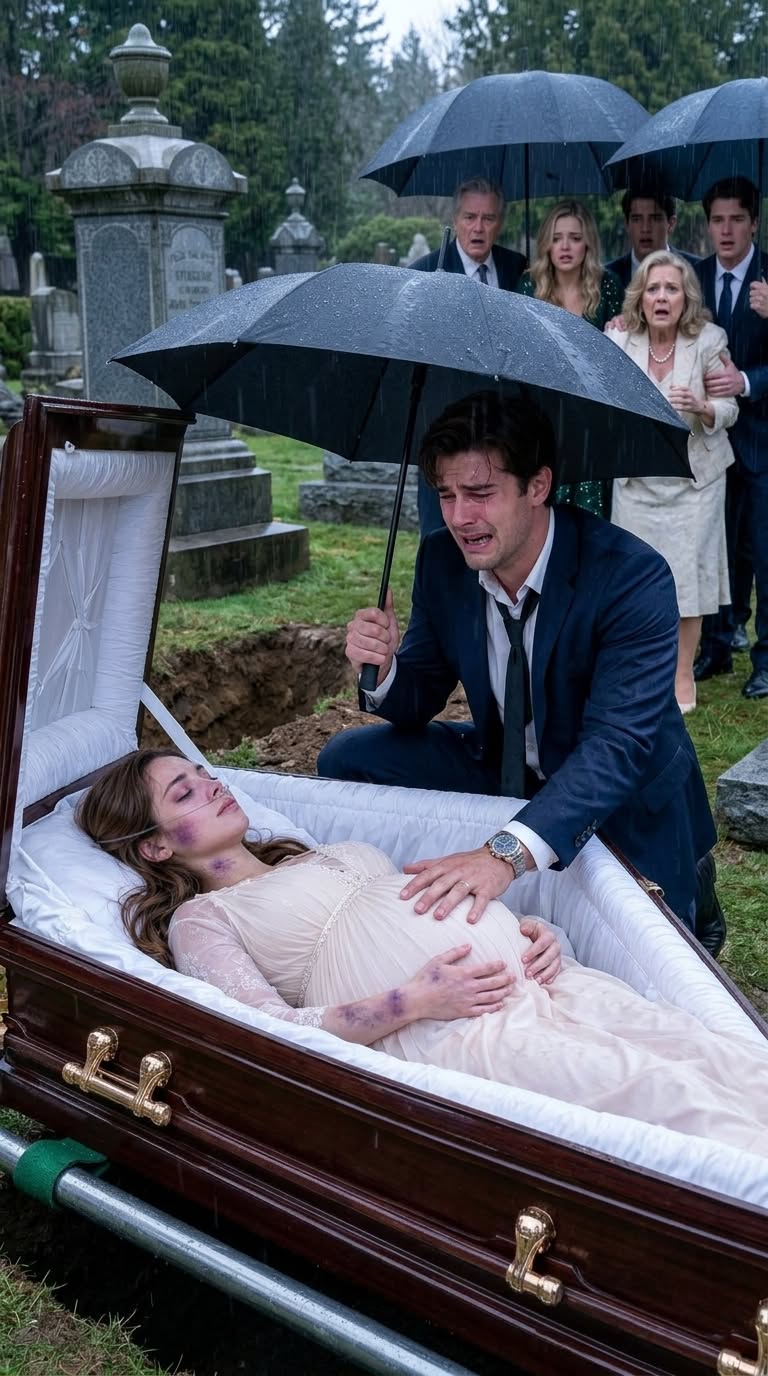
The Silent Heir: A Chronicle of My Family’s Ruin
Chapter 1: The Waxen Mask
The heat of Abu Dhabi is a physical weight, a shimmering curtain of gold and grit that settles into your lungs. For eighteen months, I had lived within that heat, overseeing the skeletal rise of a skyscraper that was supposed to be my masterpiece. It was a monument of glass and steel, but to me, it was a fortress of solitude. Every steel beam bolted into place was a second closer to the only thing that mattered: my return to Elena.
Elena was the antithesis of the Blackwood name. My family, for three generations, had built their empire on the cold mathematics of acquisition and the quiet erasure of competitors. We were a family of “polished stones”—smooth, hard, and incapable of warmth. But Elena was light. She was the woman who had looked at the scars on my hands from my time as an army medic and didn’t ask about the blood; she asked about the lives I had saved.
I touched the small, velvet box in my pocket as the taxi wound through the fog-choked iron gates of Blackwood Manor. Inside was a custom-designed watch for our son, Noah, whose arrival was expected any day. The manor stood like a gargoyle against the midnight sky of the English countryside, its windows dark and uninviting. I hadn’t called. I wanted to surprise her. I wanted to walk into our bedroom, see her sleeping form, and feel the sudden, sharp peace of being home.
The taxi’s headlights flickered across the driveway, illuminating the gravel like bone fragments. I stepped out, the damp, recycled air of the manor’s grounds a shocking contrast to the desert heat. My boots crunched on the stone as I approached the heavy oak doors. I noticed a soft, amber glow coming from the nursery window on the second floor. A surge of warmth hit my chest. She was awake. Perhaps she was rocking in the chair we had picked out together in a small boutique in London.
Then, I saw it. Hanging on the heavy brass hook beside the entrance was her favorite Yellow Scarf. It was silk, a splash of vibrant sunshine against the grey stone of the house. It swayed slightly in the night breeze, looking like a discarded spirit. My heart gave a strange, rhythmic thump of unease. Why was it outside?
I let myself in with my key. The silence of the house was unnatural. It wasn’t the silence of a sleeping home; it was the heavy, pressurized silence of a vacuum. I dropped my bags in the foyer and walked toward the drawing room.
The furniture—the heirlooms that had been in our family for a century—had been pushed ruthlessly to the edges of the room. In the center, beneath the crystal chandelier that cast a fractured, clinical light, rested a mahogany coffin. It was propped open on two velvet sappets. The scent of lilies—cloyingly sweet and thick—hit me like a physical blow.
My mother, Eleanor Blackwood, stood beside the casket. She was draped in black silk, her posture as rigid as a soldier’s. Her hair was pulled back into a knot so tight it seemed to pull the skin of her face into a permanent mask of severity. She didn’t look up as I entered. She simply adjusted a fold in the white lining of the coffin.
“She died in childbirth,” Eleanor said. Her voice didn’t tremble. It was as smooth and cold as a polished gravestone.
The world tilted. I felt the air leave my lungs. I grabbed the back of a wingback chair, my knuckles turning white. “What? No. I spoke to her yesterday. She was laughing, Eleanor. She told me the baby was kicking. She was fine.”
“Complications arise, Daniel,” she replied, finally looking at me. Her eyes were dry, devoid of the grief a mother should feel for her daughter-in-law. “The strain was too much. The baby… he didn’t make it either. It was a tragedy of biology, nothing more.”
“Where is the medical report?” I demanded, my voice cracking into a raw, jagged sound. “Which hospital? Why wasn’t I called?”
A shadow moved by the fireplace. My younger brother, Marcus, stepped into the light. He held a glass of twenty-year-old scotch, swirling it with a casual, predatory grace. Marcus had spent his life in the shadow of my grandfather’s will—a will that had bypassed him and my mother to leave the controlling interest of Blackwood Industries to me and my wife.
“Don’t start a scene, Daniel,” Marcus sneered, his voice laced with a synthetic pity. “You were in the middle of a desert. We handled the arrangements. The press is already buzzing; we couldn’t have the Blackwood name dragged through a messy public inquiry about a failed home birth.”
I ignored him and walked toward the coffin. My legs felt like lead. I looked down at the woman I loved. Elena looked peaceful, but it was an artificial peace. Her skin was the color of alabaster, her lips a faint, waxy blue.
I reached out, my fingers trembling, and touched her cheek.
My brow furrowed. She wasn’t cold. Not with the absolute, soul-deep chill of the dead. She felt… refrigerated. Cool, but with a lingering suppleness to the skin. I moved my hand to her neck, searching for the carotid artery.
And then, I saw it. A faint, yellowish bruise on her temple, barely hidden by a lock of dark hair. It wasn’t a bruise from a fall; it was a thumbprint.
I looked down at her abdomen, still swollen with the life we had created. The white funeral cloth draped over her moved. It wasn’t the wind. It was a sharp, rhythmic kick from within.
Thump.
The furniture—the heirlooms that had been in our family for a century—had been pushed ruthlessly to the edges of the room. In the center, beneath the crystal chandelier that cast a fractured, clinical light, rested a mahogany coffin. It was propped open on two velvet sappets. The scent of lilies—cloyingly sweet and thick—hit me like a physical blow.
My mother, Eleanor Blackwood, stood beside the casket. She was draped in black silk, her posture as rigid as a soldier’s. Her hair was pulled back into a knot so tight it seemed to pull the skin of her face into a permanent mask of severity. She didn’t look up as I entered. She simply adjusted a fold in the white lining of the coffin.
“She died in childbirth,” Eleanor said. Her voice didn’t tremble. It was as smooth and cold as a polished gravestone.
The world tilted. I felt the air leave my lungs. I grabbed the back of a wingback chair, my knuckles turning white. “What? No. I spoke to her yesterday. She was laughing, Eleanor. She told me the baby was kicking. She was fine.”
“Complications arise, Daniel,” she replied, finally looking at me. Her eyes were dry, devoid of the grief a mother should feel for her daughter-in-law. “The strain was too much. The baby… he didn’t make it either. It was a tragedy of biology, nothing more.”
“Where is the medical report?” I demanded, my voice cracking into a raw, jagged sound. “Which hospital? Why wasn’t I called?”
A shadow moved by the fireplace. My younger brother, Marcus, stepped into the light. He held a glass of twenty-year-old scotch, swirling it with a casual, predatory grace. Marcus had spent his life in the shadow of my grandfather’s will—a will that had bypassed him and my mother to leave the controlling interest of Blackwood Industries to me and my wife.
“Don’t start a scene, Daniel,” Marcus sneered, his voice laced with a synthetic pity. “You were in the middle of a desert. We handled the arrangements. The press is already buzzing; we couldn’t have the Blackwood name dragged through a messy public inquiry about a failed home birth.”
I ignored him and walked toward the coffin. My legs felt like lead. I looked down at the woman I loved. Elena looked peaceful, but it was an artificial peace. Her skin was the color of alabaster, her lips a faint, waxy blue.
I reached out, my fingers trembling, and touched her cheek.
My brow furrowed. She wasn’t cold. Not with the absolute, soul-deep chill of the dead. She felt… refrigerated. Cool, but with a lingering suppleness to the skin. I moved my hand to her neck, searching for the carotid artery.
And then, I saw it. A faint, yellowish bruise on her temple, barely hidden by a lock of dark hair. It wasn’t a bruise from a fall; it was a thumbprint.
I looked down at her abdomen, still swollen with the life we had created. The white funeral cloth draped over her moved. It wasn’t the wind. It was a sharp, rhythmic kick from within.
Thump.
My military training—the years of triage in the field—snapped into place, overriding the grief. I pressed my ear to her chest. Beneath the silk, I heard it. A heartbeat. Faint, labored, and dangerously slow, but it was there.
Die Zubereitung finden Sie auf der 2. Seite